
Are Edinburgh’s Festivals Responsible for the People Who Make It Happen?
Living so close to Edinburgh, my wife and I are incredibly fortunate to be able to visit the city whenever we like. There is perhaps no better time to do that than August, when the city becomes one of the greatest stages in the world.
Comedy, theatre, burlesque, music, dance and thousands of performers take over venues, streets, parks and unexpected corners of the city. It is an extraordinary celebration of creativity, and one of the things that makes Edinburgh such a special place.
So, naturally, we had to go and see a few shows.
Our favourite so far has been Ladyboys of Bangkok. What struck us was that the show doesn’t spend much time focusing on the performers being “ladyboys” or on the fact that they come from Bangkok. Instead, it is simply an incredibly entertaining show built around dancing, comedy, costumes and a huge amount of energy.
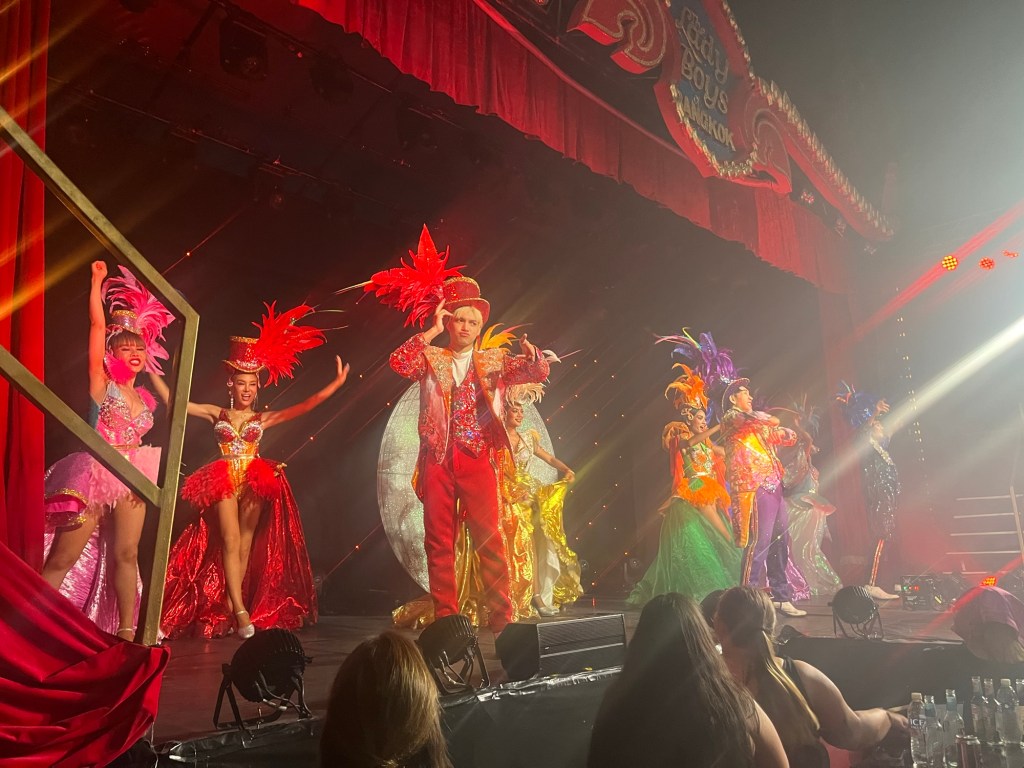
We enjoyed it so much that we went back for a second time.
And it was while booking those tickets that something else caught my attention.
Looking through the booking calendar, I noticed that the show appeared to be running every day, with performances at least twice a day, for several weeks.
It made me wonder:
When do the performers get to rest?
I have to admit that I look at this question through the lens of my own profession.
As someone who drives a minibus professionally, I am required to comply with strict rules governing working hours and rest periods. These regulations exist for a very good reason: fatigue affects concentration, reaction times, decision-making and ultimately safety.
Of course, performing on a stage isn’t the same as driving a vehicle full of passengers. A tired performer isn’t necessarily putting dozens of people’s lives at immediate risk.
But they are still human beings.
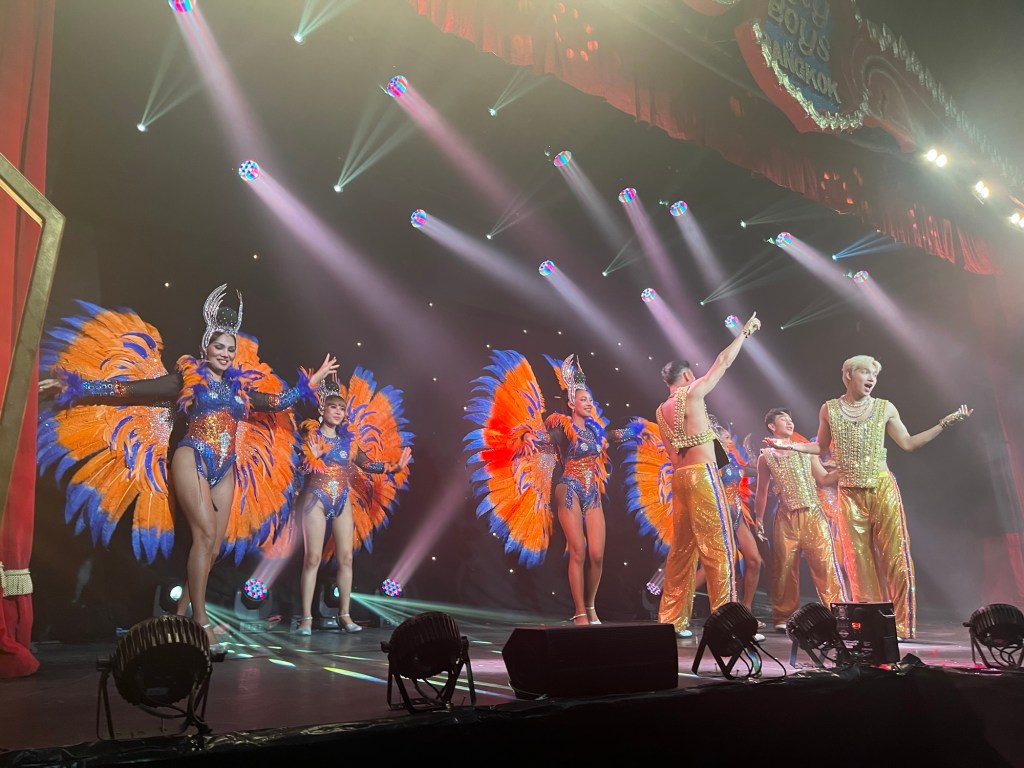
Physical and mental fatigue doesn’t disappear simply because the workplace happens to be a theatre rather than a road.
And that got me thinking about something I don’t believe we discuss enough when we talk about responsible tourism.
Is tourism responsible if the people creating the experience aren’t?
We quite rightly talk about the environmental impact of tourism.
We talk about carbon emissions, overtourism, local communities, sustainable transport, biodiversity and the economic benefits tourism can bring.
But what about the people who actually deliver the experiences?
The guides.
The drivers.
The hotel staff.
The restaurant workers.
The cleaners.
The performers.
The people working incredibly long hours behind the scenes while millions of visitors enjoy themselves.
If we believe that tourism should be responsible, shouldn’t that responsibility extend to them as well?
I don’t know the individual working arrangements of the Ladyboys of Bangkok performers, and I certainly don’t want to make assumptions about their contracts, rest days or working conditions.

Perhaps there are days off built into their schedules that aren’t obvious from the public booking calendar.
But if performers really are working seven days a week, potentially performing twice a day for several consecutive weeks, I think it is reasonable to ask whether that is good for their physical and mental wellbeing.
And more importantly, should we simply accept it because there is a commercial demand for the show?
The economics of a festival
I completely understand the commercial argument.
Edinburgh in August is extraordinarily busy. Thousands of visitors come to the city specifically to experience the festivals. If people are willing to buy tickets, there is an obvious incentive to put on as many performances as possible.
I’m not naïve about the realities of running a business.
But when I looked at the availability for the shows I attended, there appeared to be plenty of empty seats.

That made me wonder whether there could be an opportunity to build rest into the schedule without significantly affecting the commercial success of the show.
For example, could a midweek performance be removed occasionally, giving the cast a genuine opportunity to rest?
Many visitors stay in Edinburgh for several days. If a show wasn’t running one evening, they could potentially attend the following night instead.
Perhaps it wouldn’t work.
Perhaps the economics are more complicated than they appear from the outside.
But surely it is worth asking the question.
What responsibility does the festival have?
This is where I think the conversation becomes particularly interesting.
Edinburgh’s festivals are not simply commercial entertainment businesses. They are a huge part of the city’s cultural identity and have a profound impact on the local economy, communities and visitors.
The organisations behind them have a responsibility to the arts and to the people who make those arts possible.
So should there be some form of minimum standard for performer welfare?
I’m not suggesting that festival organisers should dictate exactly how every individual show operates.
But could they encourage or require participating productions to demonstrate that appropriate rest, welfare and fatigue-management arrangements are in place?
We already accept this principle in many other industries.
We regulate working hours in transport.
We have employment protections.
We take workplace health and safety seriously.
We recognise that fatigue can have serious consequences.
Why should the arts be fundamentally different?

Responsible tourism must include people
For me, this isn’t really about one show.
Ladyboys of Bangkok simply prompted me to think about a much bigger question.
We often define responsible tourism in terms of places and planet.
But perhaps we need to put people much more firmly at the centre of the conversation.
A tourism experience isn’t created by a website, a ticket or a venue.
It is created by people.
People who drive us there.
People who cook our food.
People who clean our rooms.
People who guide us around historic sites.
And people who step onto a stage night after night and give thousands of visitors an experience they will remember for years.
If those people are exhausted, overworked or unable to properly rest, can we really describe the experience as responsible?
I don’t pretend to have the answer.
And I certainly don’t want to criticise an industry I know is already incredibly demanding.
But perhaps that’s precisely why we should be asking the question.
Responsible tourism shouldn’t just ask whether a destination can cope with the visitors who arrive. It should also ask whether the people who make those visitors’ experiences possible are being given the opportunity to thrive.
Edinburgh’s festivals bring an extraordinary amount of joy to the city every August.
Perhaps looking after the people who create that joy should be part of the celebration too.

